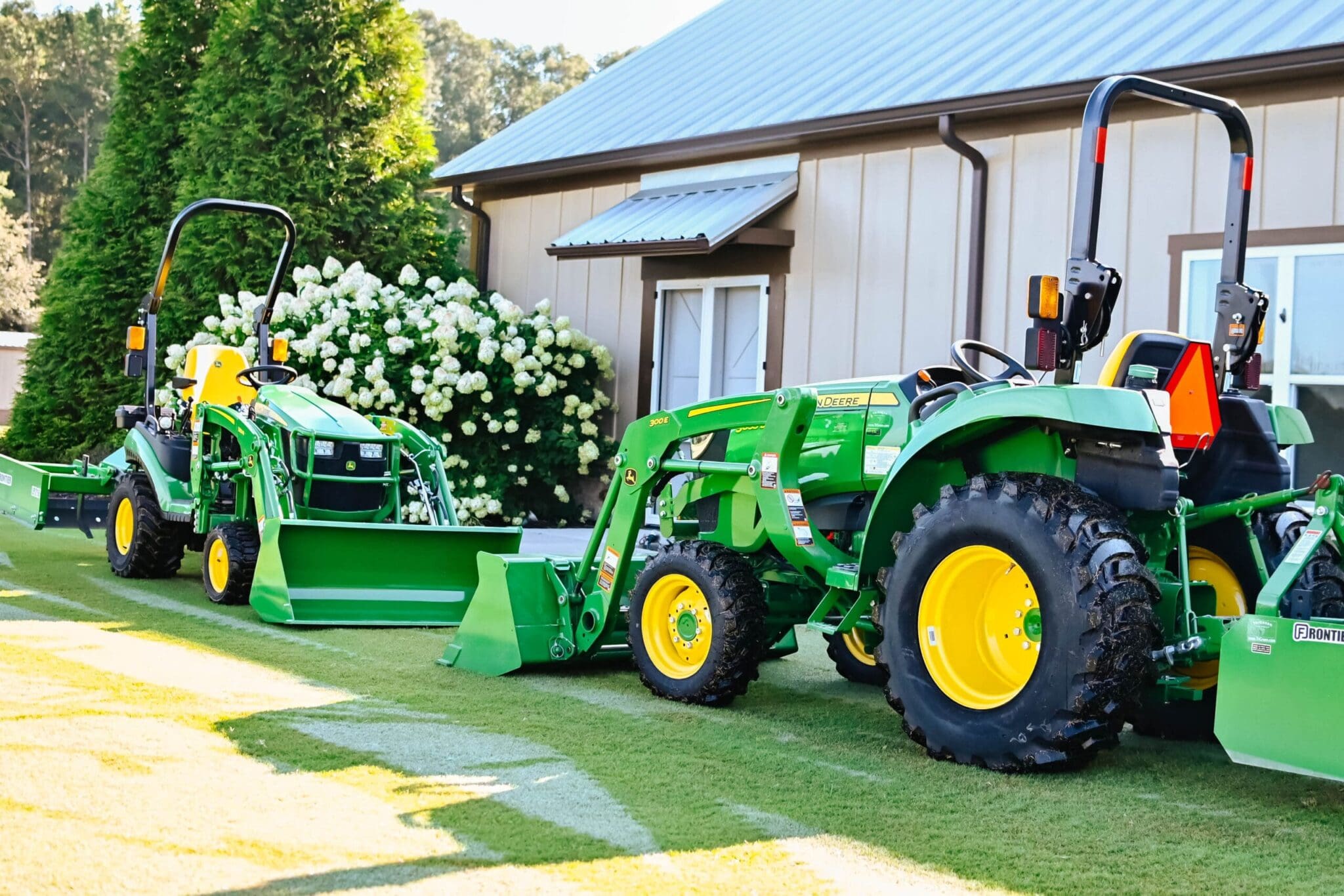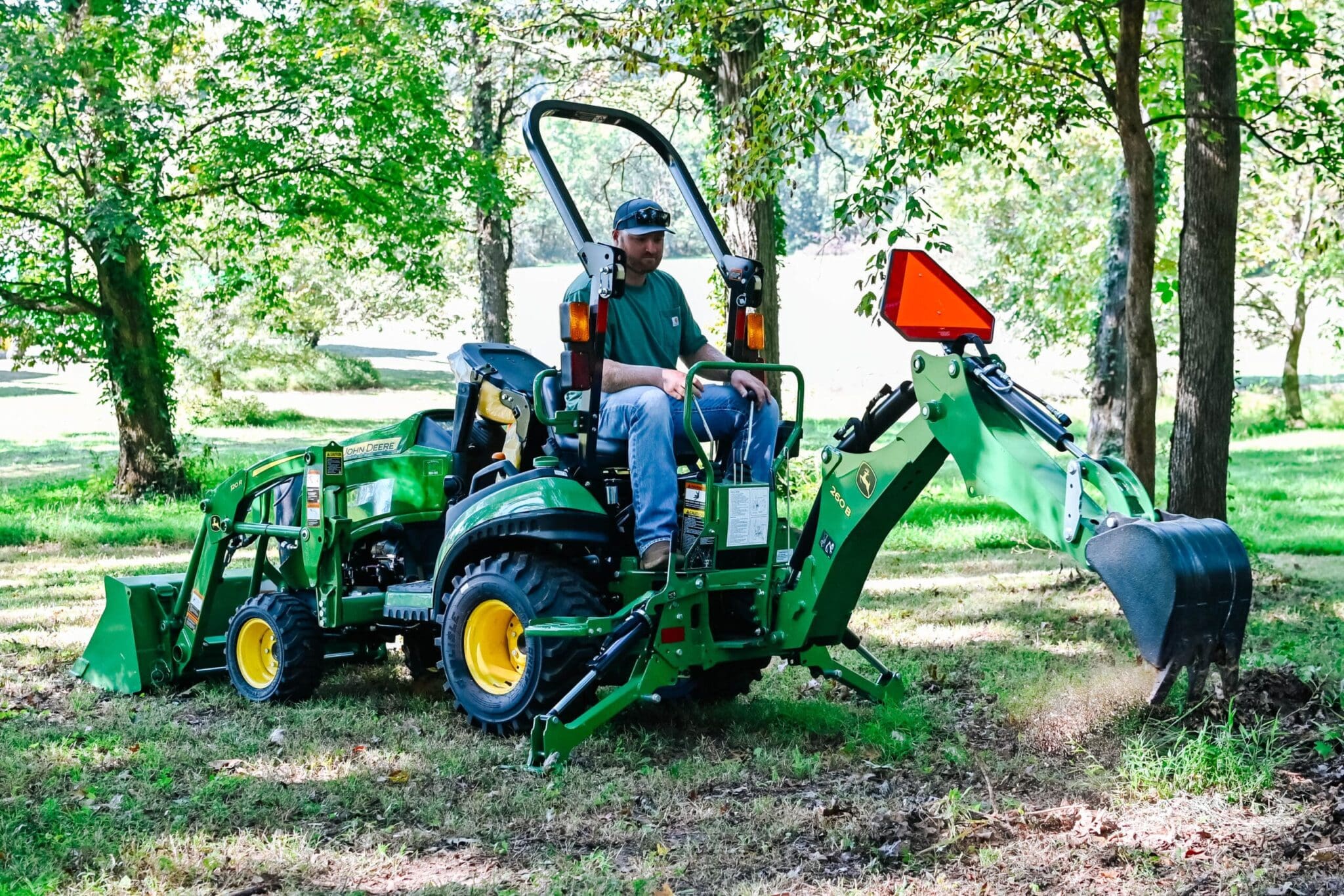
Buying a new tractor is like its own holiday – it’s a huge deal. We’re here to help you find one that’ll have you looking forward to tackling those challenging jobs for years to come.
Take the quiz
Before reading further, be sure to try out our custom tractor selector tool on this page.
Ask yourself a few questions.
If you’re looking for a new tractor, you probably have some projects planned. Outlining exactly what you plan to do will help you find the best tractor for your needs. Ask yourself these questions:
1) What am I planning to do?
Get specific on what jobs you plan to do with your tractor – today, and in the future. This will help you determine the horsepower needed, transmission preferences, how much loader lift capacity you need, and so on.
For example, do you need a small tractor with a mower? What about a mechanical front-wheel drive (MFWD) utility tractor for muddy pastures in the winter? Or maybe you’re looking for a sub-compact garden tractor that can handle a variety of implements and attachments.
If you’re looking to do a lot of loader work, you may want to consider a machine with a hydrostatic transmission (HST) – which is more like an automatic car with forward and reverse pedals, instead of a manual gear-drive system. Loader work with gear drive machines is manageable, but the forward and reverse pedals mean you can focus on the loader without constant shifting.
John Deere compact tractors pack a punch, but sometimes you need more power than you can get in a small package. If you’re moving hay bales, running high-flow hydraulic implements or pulling heavy equipment, you may need to consider a tractor in the 5-Series or above. These don’t have an option for hydrostatic transmissions, but John Deere’s legendary PowrReverserTM transmission makes operating a gear-drive machine simple.
Certain implements require a power take-off (PTO) to function. Think of rotary cutters, tillers, hay balers, augers and other implements that use some sort of rotation to get the job done. Most of these have a minimum horsepower level at which they can be run. Keep that in mind when researching!
If you’re going to be operating in tight spaces often, you will want to consider turning radius in your decision – luckily, John Deere tractors are known for their ability to navigate in tight spaces.
2) How often am I planning on working with my tractor? How long will jobs take?
If you’re running your new tractor for several hours a per week, you may want to consider upgraded features. Suspension seats, canopies, and even cabs can all make your ride more enjoyable.
Running your machine isn’t the only factor to consider, though. If you’re going to be switching implements frequently, you may want to consider attachments and upgrades like an iMatch Quick Hitch, adjustable draft links, and Quik Knect PTO systems.
Everyone is different, so remember that you may find a hydrostatic transmission more comfortable than gear drive, or vice versa.
Not all tractors are equal in terms of durability. If you’re going to use your tractor several days per week, you may want to opt for a Heavy Duty (HD) model 4-Series tractor. If you’re hauling heavy loads, consider moving up to the 5-Series to ensure extra stability and durability.
3) What is my terrain?
Steep slopes and uneven terrain are an important factor in safely working on a tractor. Here’s a good rule of thumb: as the slopes get steeper, so should the tractor size. Consult the operator’s manual for prospective tractors to understand their maximum operating slope.
Property owners in hilly Middle Tennessee are more likely to need a heavy duty tractor with a large chassis than folks in the flat parts of northwest Alabama.
Understanding John Deere Tractor Model Numbers
John Deere compact tractors share a model number system with utility and row crop tractors. The numbers aren’t random, but include important information about the machine. Check out this diagram:
3025E
The first number denotes the series of tractor – the bigger the number, the bigger and heavier the chassis.
3025E
The last two numbers approximate horsepower.
3025E
The letter references the tractor capability; D means gear drive, R has the most capabilities followed by M and then E.
The model numbers don’t include things like whether the tractor is only rear wheel drive, so be sure to read the product specs when comparing tractors!
How much horsepower do you need?
Question 1 will help you answer this. Engine horsepower is highly dependent on the types of implements you are planning on running.
A machine with 40 horsepower will be able to run larger, more aggressive implements than a lawn tractor with 25 horsepower. Certain implements (like any large round balers) require over 100 horsepower to run!
Make a list of implements that you plan on running with your new tractor, and talk with a salesperson if you need help deciding what your limitations might be!
Front End Loaders
John Deere manufactures a variety of loaders of different sizes and capacities. You’ll need a tractor large (or small) enough to handle the loader that you need.
Check out this page for information on loader compatibility.
There are several things to consider when selecting a loader:
Lift Capacity
Be sure you have an idea of what you’re planning on hauling with your loader, and how heavy it is. Your TriGreen Equipment sales team can help you think through this!
Lift Height
If you’ll be stacking things like pallets or hay bales, you will need a loader that can lift objects to the necessary height. Be sure to have an estimate of what that height might be!
Mechanical Self Leveling (MSL) vs Non-Self Leveling (NSL)
MSL loaders do exactly what the name suggests: level as they move up and down. This isn’t just an extra convenience for moving pallets. MSL loaders actually have a higher lift capacity than their non self-leveling counterparts!
Attachment Type
There’s nothing more frustrating than getting one implement unhooked, getting another lined up and realizing that you don’t have all the hardware you need. Certain loaders come with different methods of attaching implements.
The John Deere global carrier system requires zero tools and hardware to remove an implement, and many implements can be reattached without leaving the seat.
If you really don’t want to have to worry about pins and bushings, pair this with an iMatch Quick Hitch!
Operator Station
Cab tractors are top-of-the line when it comes to comfort. Heating and air conditioning, radios and Bluetooth® audio, adjustable suspension seats and protection from the elements can all make those long jobs in harsh weather more bearable.
Open Station tractors may be missing some of the bells and whistles of cab tractors, but they provide greater visibility and can be run in tighter spaces.
Even we enjoy hearing the roar of the engine and the smell of fresh-cut hay from time-to-time. Just remember to dress accordingly during the cold months.
New vs. Used Tractors
Not sure exactly which model of tractor is right for you? Check out our tractor selector quiz!
Used equipment can be a great option if your local dealership doesn’t have the exact new piece you’re looking for, but there are many factors to consider. Used equipment often comes with a partial warranty, but usually starts at a lower price. Be sure to work with your salesman to stay up-to-date on TriGreen’s used tractor inventory.